
Ontario, CA · Garage Door Service
What Ontario's 1960s and '70s Housing Stock Means for Your Garage Door
Most Ontario homes went up between 1957 and 2007, median 1976, before current insulation and energy codes. Here's what that means for your garage door.
- Repairs & new doors
- Springs & openers
- Serving 6 nearby communities
When Waiting Is Fine
A lot of what comes through on a service call here doesn't need a truck that same day. A noisy roller, a door that drifts an inch off level, a weatherstrip curling at the bottom edge - none of that is an emergency, and we'll tell you straight if it can sit on the schedule.
Part of why we can say that with a straight face is the climate. Ontario sits in a moderate heat band, not the kind of triple-digit desert extreme you'd find out past Lake Mathews or Woodcrest, where a bad seal on an uninsulated door actually costs you on the utility bill every single day it's ignored. Here, a gap in the weatherstrip or a door skin that's lost its foam backing is an annoyance, not a reason to drop everything.
Where waiting stops being fine: a spring that's visibly stretched or one cable strand that's frayed. Those don't get better on their own, and they don't care what the thermostat says. If your door is original to a house built in the 1960s or '70s - which covers a lot of this area - the hardware holding it up has had decades to fatigue, even if the panel itself still looks fine from the driveway.
The Cost of This Job
We don't post a price list here because the honest answer is "depends on what's actually wrong," and guessing in print does nobody any favors. What we can tell you is how the decision usually plays out for people in this area.
The service area we work covers roughly 346,173 households, and about half of those - 175,466 - are owner-occupied houses rather than rentals. That split matters because an owner decides for themselves whether to repair or replace; a renter waits on a landlord. If you own the house, the call is yours, and that changes how fast you move.
Median household income across the area runs around $103,632, which is high enough that most owners we talk to aren't stretching to cover a repair bill - the harder question is usually whether to fix an old door or put that money toward a new one. A door built when the house was, especially anything from the 1960s or '70s stock that's common here, often has hardware and a steel skin that are both near the end of useful life at the same time. Replacing the whole unit can cost less over five years than patching the same door twice.
How Local Conditions Play In
Two things define what a garage door needs to deal with in Ontario: the age of the housing stock and the climate band it sits in.
Housing here was built mostly between 1957 and 2007, with the median landing around 1976, and the bulk of it clustered in that 1960s-to-70s wave across the named areas in this part of the county. A door installed in 1976 was built to a different set of expectations than one installed today - thinner steel, no foam core, hardware sized for a lighter panel. None of that is a defect. It's just what the building standards of that decade called for.
The climate here is classified as moderate heat, not extreme. That matters for doors specifically because an uninsulated or thin-skin door in a moderate climate is a comfort issue, not a structural one - it doesn't warp the way a door can in a true desert heat zone with wide day-to-night swings. So the failures we actually see on older Ontario doors tend to be mechanical - springs, cables, rollers, the opener's gearing - rather than the door itself cracking or bowing from heat stress. That's useful to know before you spend money assuming heat damage when the real problem is thirty-year-old hardware doing exactly what thirty-year-old hardware does.
What Is Going On
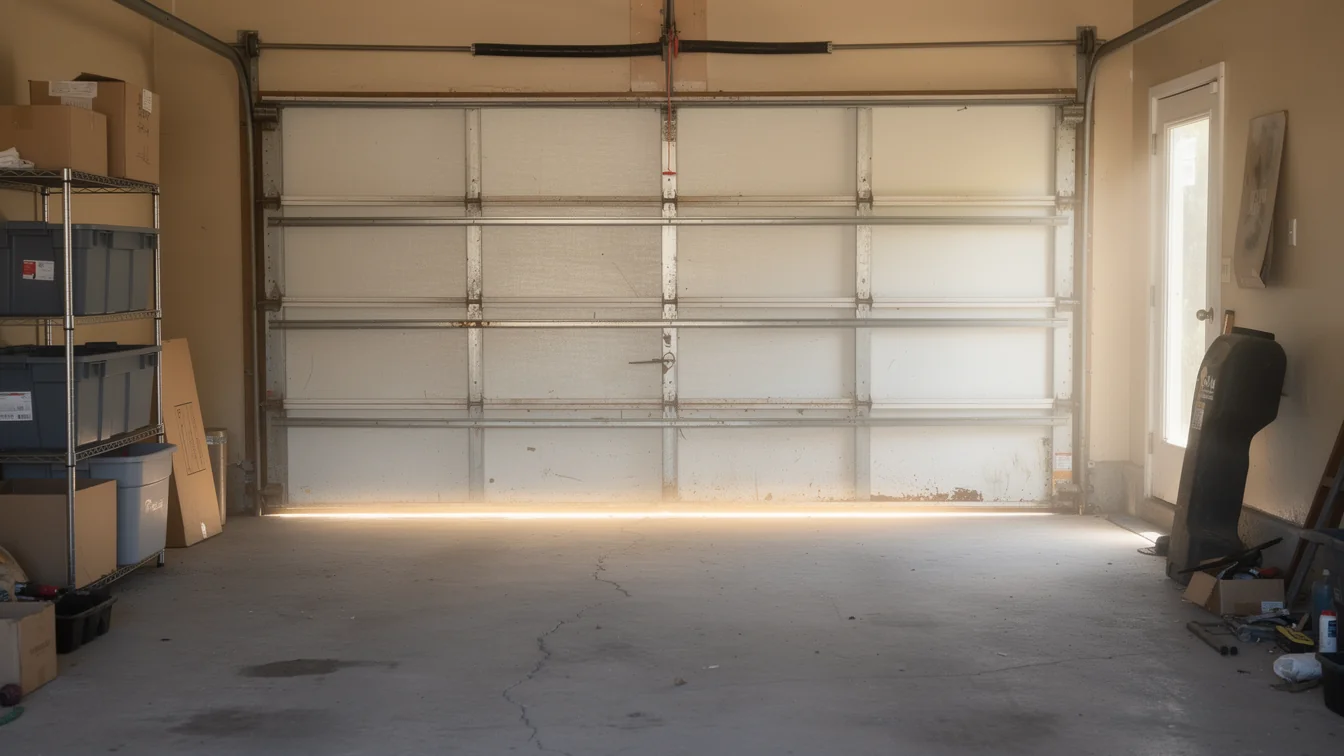
If your door is original to the house and the house was built anywhere near that 1976 median, you're looking at doors on houses built before insulation rules tightened up the way they later would. That's not a flaw in your specific door - it's just the era. A steel skin with no foam backing, single-layer construction, hardware sized light because the panel itself is light. That combination ages predictably: springs lose tension years before anyone notices, rollers wear grooves into the track, and the door starts sagging at the bottom corners first.
What we can't do is retrofit real insulation into an old single-skin panel - foam injection kits exist, but they don't turn a 1970s door into a modern insulated one, and we won't sell you on the idea that they do. If insulation is the actual goal, replacement is the honest answer, not a patch job.
What we can do is keep the existing door running safely for as long as it makes financial sense - new springs, new cables, a properly adjusted track - and tell you plainly when a given door has moved from "repairable" into "you're paying to delay the inevitable." That line is different for every door, which is exactly why we look at yours before we quote anything.
Frequently asked questions
Is my garage door too old to repair?
Age alone doesn't rule it out. A lot of doors from the 1960s and '70s wave of housing here are still mechanically sound; it's usually the springs, cables, or rollers that fail first, not the panel. We check the hardware and the steel skin separately before telling you whether a repair makes sense or whether you're better off replacing.
Will insulating my old door lower my bills much?
In a moderate heat climate like Ontario's, the savings from insulating an old single-skin door are real but modest compared to what you'd see in a true desert zone. It's worth doing if you're replacing the door anyway; it's rarely worth a standalone retrofit project on its own.
Can a noisy door wait until next week?
Usually, yes. Noise on its own - a roller squeal, a rattle in the track - is almost never urgent. What changes that is a visibly stretched spring or a frayed cable strand. Those don't improve with time, and we'd rather you call before they fail outright than after.
Related garage door services in Ontario
More garage door guides
Book garage door service in Ontario
Call now or request a quote - tell us what the door is doing and where you are.