
Ontario, CA · Garage Door Service
Garage Door Roller Replacement for Ontario-Area Homes
Worn rollers on 1960s-2000s Ontario-area homes bind, crack, and jump track under heat-cycling. We replace them with the right roller for your door and hardware.
- Repairs & new doors
- Springs & openers
- Serving 6 nearby communities
Time on the Job
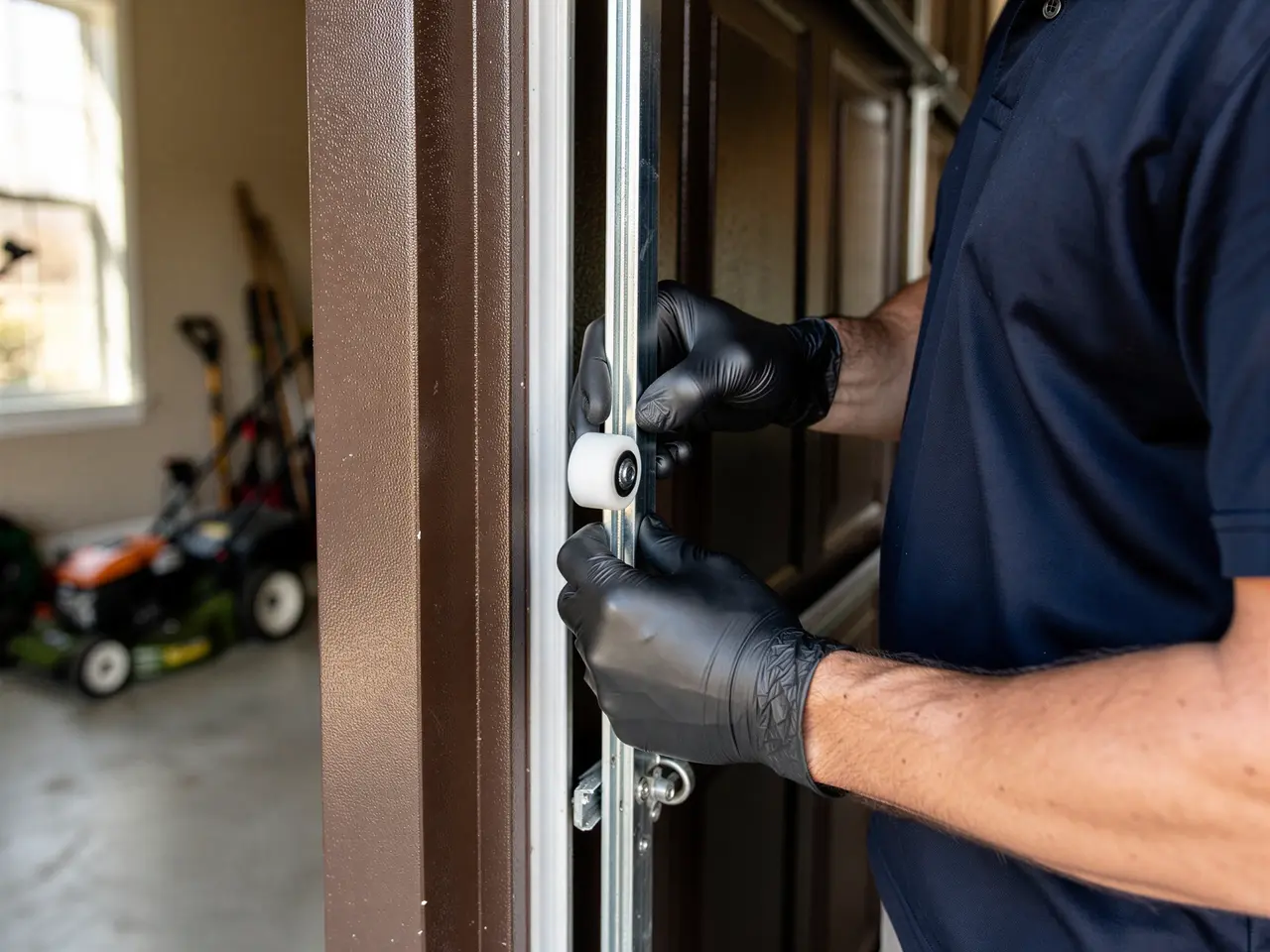
Roller replacement is a short job compared to a spring swap, but it's not always quick in this service area. Houses here were mostly built between 1957 and 2007, with the bulk of the stock from the 1960s and 70s, which means a lot of doors still running on original steel rollers and tracks that have shifted a fraction of an inch over fifty-plus years. On a door that's been maintained, swapping ten rollers and checking the track alignment is a one-visit job. On a door that's never had the track adjusted since it was installed, we're also shimming brackets and sometimes replacing a bent section of track, because a worn roller rarely travels alone. We tell owners up front if the track needs more than a cleanup, since that changes the scope.
Across the 346,173 households and 175,466 owner-occupied houses in this part of the Inland Empire, roller wear shows up on a wide range of door ages, not just the oldest ones. A 1990s door with the stock rollers it shipped with is usually due. We carry nylon rollers with sealed bearings as the standard replacement, since they run quieter and don't need the lubrication steel rollers do.
Why It Happens Here
This area sits in a moderate heat band, and that matters more for rollers than most owners expect. Steel expands and contracts with daily temperature swings, and a garage that bakes through the afternoon and cools at night puts a door's hardware through a small cycle of stress every single day. Over a few decades that cycling loosens roller stems, dries out the grease in steel roller bearings, and lets rust start at the stem where moisture condenses overnight even without rain.
Housing stock matters too. With most homes in this service area dating to the 1960s and 70s, a large share of doors are running galvanized steel rollers from an era before nylon became standard. Those rollers were built for an average service life, and most of that life has already been spent. Nylon rollers with sealed bearings handle the same heat cycling without the metal-on-metal wear, which is why we replace steel for nylon rather than steel for steel unless an owner specifically wants to match original hardware.
What You Are Seeing
A grinding or popping sound as the door moves is usually a roller with a flat spot or a cracked wheel, not a motor problem. If the door jerks at the same point on every cycle, that's often one bad roller catching on a section of track rather than the whole system failing. Rollers that have come loose from their stems will let the door rock side to side instead of running straight, and you'll sometimes see daylight shift at the bottom seal as it travels.
Rust streaks on the track below each roller are a sign the stem bearing is dry and has been grinding metal for a while. If you can wiggle a roller by hand and feel play in the stem, that roller is done, and we'd rather replace the full set than one or two, since the rest aren't far behind. One thing we won't do is sell a full roller replacement when the real issue is a bent track section - straightening or replacing the track costs less and fixes the actual problem.
Doing It Yourself
Top rollers are a two-person job at minimum, and we don't recommend owners tackle the top two rollers near the spring assembly themselves. A garage door spring under tension can cause serious injury if a bracket shifts while you're working near it, and on a door old enough to need its rollers replaced, the spring is usually just as old. Bottom rollers on an unloaded door, with the opener disconnected and the door manually propped, are lower risk and some owners do manage that part.
If you do replace bottom rollers yourself, check that the new rollers match your track gauge - doors from different decades in this service area were built around slightly different track widths, and a mismatched roller will bind even when it looks like it fits. If the door hesitates, grinds, or won't sit flush after a DIY roller swap, that's usually a track alignment issue we can check without needing to redo the roller work itself.
Frequently asked questions
How many rollers does a typical garage door have?
Most residential doors have ten rollers, with two near the top on each side closest to the spring assembly. We generally replace the full set together, since rollers installed at the same time wear at close to the same rate, and replacing one or two now just means doing the rest again soon.
Do you match the original roller type or upgrade to nylon?
We install nylon rollers with sealed bearings as the standard replacement on steel roller doors, since they handle daily heat cycling with less wear and don't need re-lubrication. If you want to match original steel hardware for a specific reason, we can source that instead.
Can a bad roller damage the track?
Yes. A roller with a flat spot or loose stem rides unevenly and can bend the track rail over time, especially near the curved section at the top. Catching it early with a roller swap is cheaper than a track replacement later.
Related services
By Neighborhood
Roller Replacement across the Ontario area
We also handle roller replacement in these Ontario-area suburbs.
Book garage door service in Ontario
Call now or request a quote - tell us what the door is doing and where you are.