
Ontario, CA · Garage Door Service
Panel Replacement for Ontario Garage Doors
Dented, cracked, or rusted panels on a 1960s-70s Ontario garage door. We match panels to original steel sections instead of forcing a full door swap.
- Repairs & new doors
- Springs & openers
- Serving 6 nearby communities
Time on the Job
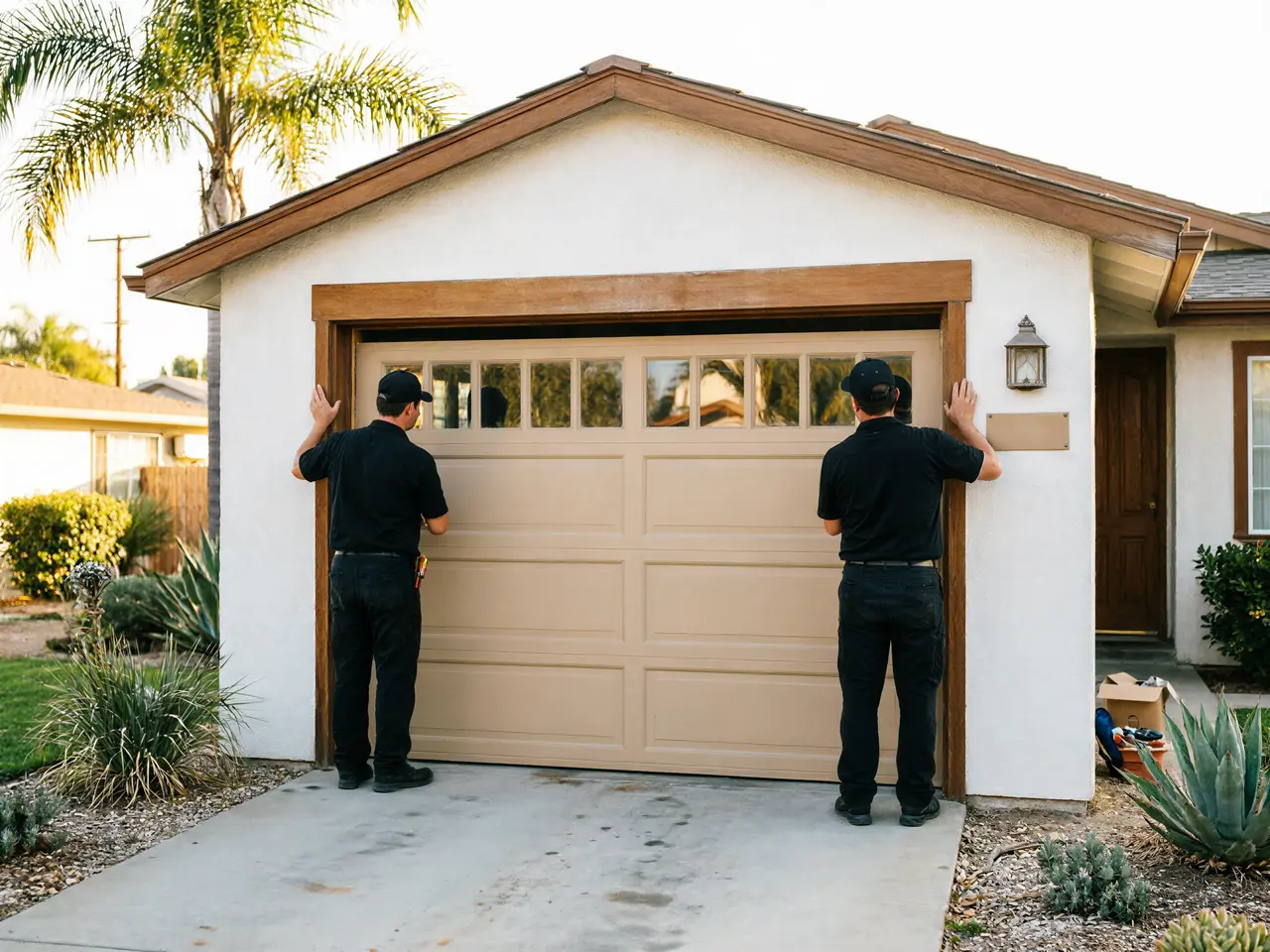
A single-panel swap on a sectional door usually runs a couple hours once we've got the right section in hand - cut the old panel free from the hinges, fit the replacement, re-hang, and balance the door against the spring. The slow part isn't the labor, it's sourcing. A lot of Ontario's housing stock went up between 1957 and 2007, with the bulk of it dating to the 1960s and 70s, so the doors on these homes are often steel profiles that manufacturers stopped running decades ago. If your door is from that era and the panel style isn't a current catalog item, we may be waiting on a supplier instead of standing at your garage. We'll tell you straight when that's the case instead of guessing a date and missing it. If the whole door is end-of-life - rusted through on more than one section, warped track, an opener that's fighting the weight - panel replacement stops making sense and full replacement is the honest call. We'd rather say that up front than sell you a patch that fails again in a year.
Why It Happens Here
Ontario's garage doors take damage in a few predictable ways tied to the age of the stock and the local climate. With median construction around 1976, a large share of doors in this area are the original steel sections - thinner gauge than what's installed today, and after forty-plus years the galvanizing at seams and the underside of bottom panels has usually started to go. The heat band here is moderate, not the kind of desert extreme that cracks vinyl doors outright, but daily thermal cycling still works on steel panels over decades: expansion and contraction loosens the roll-formed seams and flexes stress points around hinge holes until a panel that's already thin gives way under a bump from a car bumper or a basketball. We also see a fair number of rust-driven failures low on the door, where irrigation overspray or sprinkler drift sits against the bottom panel longer than it should. None of this is dramatic weather damage - it's slow, cumulative wear on doors that are simply old for their gauge of steel.
What You Are Seeing
Most calls start with something visible: a caved-in panel from a backed-into bumper, a crack running along a seam, or rust bubbling through the paint on the bottom section where it sits closest to the slab. Sometimes it's less obvious - a panel that looks fine but has gone soft, flexing when you push on it, which usually means the inner reinforcement has corroded even though the face steel still holds paint. On older doors from the 1960s-70s builds common across this area, we also see panels where the hinge stile has worn oval from decades of torque, so the panel rattles even when the steel itself is intact. If you're hearing a new grinding or popping sound every time the door cycles, or noticing daylight through a seam that used to be tight, that's a panel problem, not a spring or opener problem - worth a look before a damaged section starts pulling on the track and turning a $cheap fix into a track and roller job too.
Doing It Yourself
If you're handy, a cosmetic dent on a panel that isn't structural can sometimes be pulled or filled - that's a reasonable weekend project if the door still runs true and the damage is purely surface-level. Swapping an actual panel yourself is a different story. You're working with a door under spring tension, and pulling the wrong hinge bolt on a loaded section can let the whole assembly drop. Matching an old panel also takes more than eyeballing it - steel gauge, rib profile, and end-stile hole spacing all have to line up or the new section fights the rest of the door every time it cycles. Given the age of a lot of the housing stock here, finding an exact match without a supplier account is harder than it looks online. If you want to try it, at minimum clamp the door in the closed position and release spring tension before you touch a hinge - and if the panel you're replacing is on the bottom section near the opener bracket, that's where we'd tell most people to call instead of climb a ladder.
Frequently asked questions
Can you replace one panel without redoing the whole garage door?
Usually, yes, as long as the rest of the door is in decent shape and the panel style is still available from a supplier. Many Ontario homes have doors dating to the 1960s and 70s, and older discontinued profiles sometimes force a full-door replacement instead. We'll check the match before quoting a one-panel fix.
Why does my garage door panel keep rusting at the bottom?
The bottom section sits closest to the ground and takes the most moisture exposure - sprinkler overspray, splash-back from rain, condensation. Combined with decades-old steel common in this area's housing stock, that section corrodes faster than the panels above it, even in a moderate climate band like ours.
Is a dented panel just cosmetic or does it affect how the door runs?
Depends on the depth and location. A shallow dent away from the hinge stiles is usually cosmetic. A dent that's bent the panel's edge or distorted a hinge mounting point can throw the door off balance and strain the opener, so it's worth having it checked rather than assumed.
Related services
By Neighborhood
Panel Replacement across the Ontario area
We also handle panel replacement in these Ontario-area suburbs.
Book garage door service in Ontario
Call now or request a quote - tell us what the door is doing and where you are.