
Ontario, CA · Garage Door Service
Garage Door Maintenance for Ontario Homes
Garage door maintenance for Ontario, CA homes built mostly in the 1960s-70s. Learn why springs, rollers, and openers wear the way they do here.
- Repairs & new doors
- Springs & openers
- Serving 6 nearby communities
Time on the Job
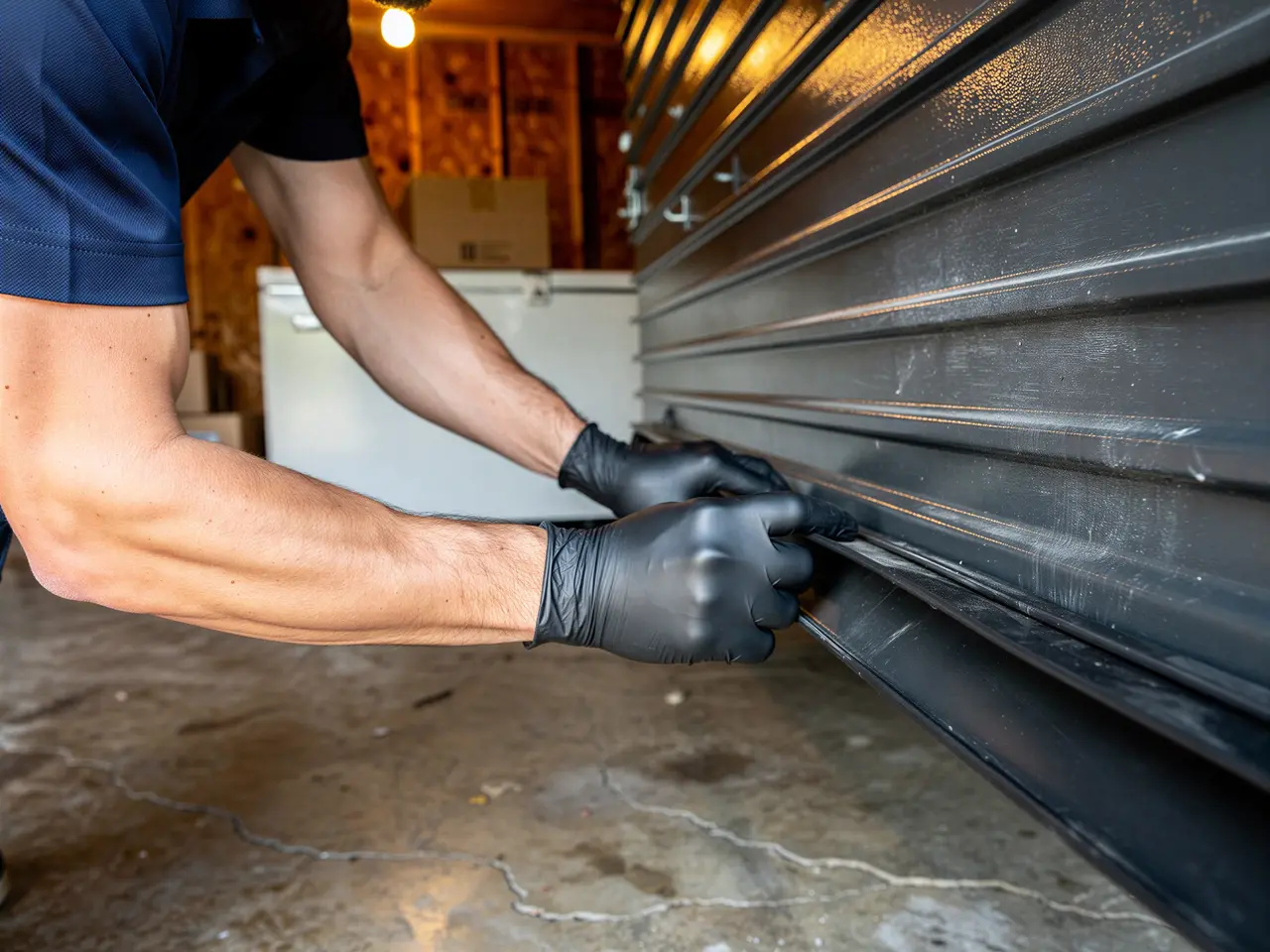
A garage door doesn't fail on a schedule, but it does fail on a pattern, and we see the same pattern across this service area over and over. Housing stock here runs from 1957 to 2007, with a median build year of 1976, which means a huge share of the doors we're called out to are riding on original or first-replacement hardware that's now three to five decades old. A torsion spring rated for roughly 10,000 cycles doesn't care how old the house is, but a homeowner who's never had the door looked at usually doesn't know they're already past that number. Maintenance on a door this age isn't about waiting for something to snap. It's catching the roller that's gone from round to oval, the cable strand that's starting to fray at the drum, the hinge that's stretched its hole an eighth of an inch. None of that shows up as a sudden failure. It shows up as noise first, then drag, then a spring that lets go on a Tuesday morning with the car half in the driveway.
Why It Happens Here
Across the 30-plus communities this service area covers, the housing stock skews heavily to 1960s and 70s construction, and that era of garage door came with steel tracks and hardware that were never built to be maintenance-free for fifty years. Add a moderate heat climate band and you get a specific failure chain: lubricant on rollers and hinges dries out faster in sustained heat than it would somewhere cooler, dust works into that dried grease instead of washing out, and the grit grinds down roller bearings and track surfaces quieter than you'd expect. It's not dramatic. There's no storm event or flood to point to. It's just heat-cycling, year after year, on hardware that's already past its original service life in a lot of these houses. The owners who call us for maintenance tend to be the ones who've already had one opener motor burn out trying to lift a door that's three times harder to move than it should be, because nobody ever lubed the rollers or backed off a track that had crept out of alignment.
What You Are Seeing
The signs are almost always the same short list. A door that used to be quiet is now grinding or popping on the way up, which usually means a roller has worn flat on one side. A door that closes crooked, dropping faster on one side than the other, points to an unbalanced spring system or a cable starting to slip at the drum. An opener that strains, hesitates, or reverses partway through the cycle is often fighting a track that's pulled slightly out of plumb rather than anything wrong with the motor itself. Rust streaks at the bottom panel or a bottom seal that's cracked and brittle are easy to ignore because the door still works, but they're usually the first visible sign that the rest of the hardware has been sitting in the same dust and heat for just as long. None of these on their own means the door is about to fail. Together, on a door built in the era most houses here were, they're worth a look before the spring goes instead of after.
Doing It Yourself
There's real maintenance an owner can do without calling anyone. Wipe down the tracks and check for debris, lubricate rollers and hinges with a garage-door-specific lubricant rather than WD-40, which actually strips grease instead of adding it, and look at the bottom seal for cracking. Test the auto-reverse by laying a 2x4 flat under the door and making sure it bounces back on contact. What we don't recommend doing yourself is anything involving the torsion spring itself. It's under enough stored tension to cause serious injury if it lets go while you're working on it, and that's true no matter how careful you are or how many videos you've watched. If a door is sagging, cycling unevenly, or making noise that wasn't there a month ago, that's the point to call rather than the point to troubleshoot further on your own.
Frequently asked questions
How often should I get my garage door serviced in Ontario?
There's no universal number, but given how much of the housing stock here dates to the 1960s and 70s, we'd rather see a door once a year than have an owner wait for a spring to fail. Annual lubrication and a hardware check catches most of the wear before it turns into a stuck or dropped door.
Why does my garage door get louder in summer?
Heat dries out lubricant on rollers and hinges faster than cooler climates do, and dust settles into what's left of the grease. That combination is a big part of why doors in this moderate heat band tend to get noisier through the hottest stretch of the year rather than staying consistent.
Can I lubricate the springs myself?
You can lubricate the coils with a light spray, but don't attempt to adjust, tighten, or remove a torsion spring yourself. It's under heavy stored tension and letting go unexpectedly can cause serious injury. Lubrication is fine; anything involving spring tension is not a DIY job.
Is my door too old to maintain instead of replace?
It depends on what's worn. A door from the 1960s-70s era with solid panels but tired rollers, hinges, and cables is usually worth maintaining. If the track is bent, the panels are rusted through, or the opener motor keeps burning out, replacement often costs less over time than repeated repair calls.
Related services
By Neighborhood
Maintenance across the Ontario area
We also handle maintenance in these Ontario-area suburbs.
Book garage door service in Ontario
Call now or request a quote - tell us what the door is doing and where you are.