
Ontario, CA · Garage Door Service
Why Garage Door Seals Matter More in Ontario's Older Homes
Ontario homes built mostly in the 1960s and 70s often have worn weather seals that let heat and dust in. Here's what a reseal job costs and when to skip it.
- Repairs & new doors
- Springs & openers
- Serving 6 nearby communities
When Waiting Is Fine
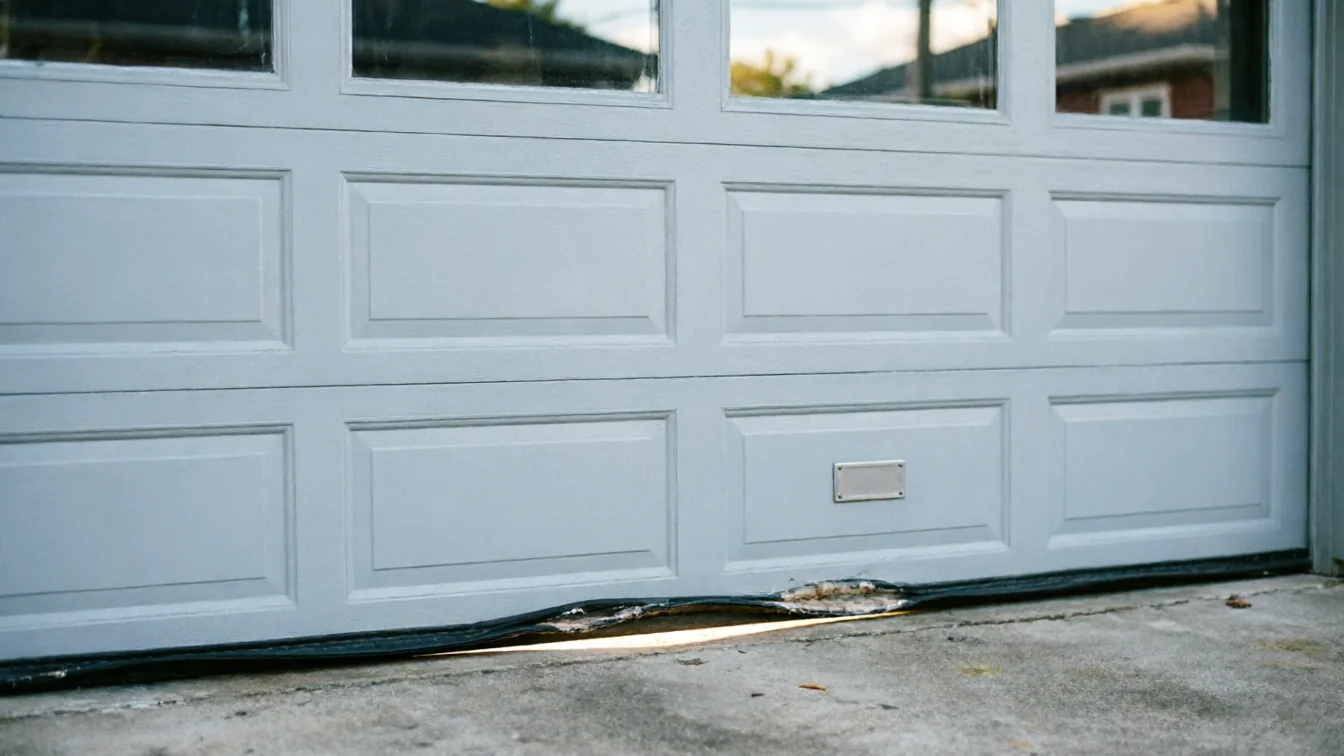
A little daylight showing under the bottom of the door, or a draft you only notice on a windy afternoon, isn't an emergency. Ontario sits in a moderate-heat climate band, not a freeze zone, so a tired seal doesn't bring the risk it would somewhere that drops below freezing for weeks at a stretch. Nothing is going to crack a pipe behind your garage wall because the bottom seal has a gap.
If the door still opens and closes square, the opener isn't straining, and the gap is cosmetic rather than a half-inch trench, you can let it ride until your next service visit instead of calling for a same-week fix. That's the honest limitation here: we'd rather bundle a seal swap with a spring check or tune-up than send a truck out for a five-minute weatherstrip job on its own. Where it stops being fine is when the gap is wide enough that you can see daylight along the whole bottom edge, or when dust is visibly building up on the garage floor after a windy week. At that point the seal has stopped doing its one job and it's worth getting on the schedule.
The Cost of This Job
Resealing a garage door is one of the cheaper jobs we do, and it should stay that way. It's a bottom astragal, a strip of jamb weatherstripping, maybe a top seal if the header gap is bad, and labor to fit and trim it to your track. Across the service area's 175,466 owner-occupied houses, enough of them share this exact seal problem on doors from the same era that suppliers keep standard jamb kits in stock, which keeps the part cost predictable rather than something that has to be special-ordered.
With median household income in the Ontario service area at $103,632, this is the kind of repair most owners handle on their own schedule rather than treating it as an emergency expense. It's not a job that competes with a spring replacement or an opener swap for your budget. Where it does get pricier is if the jamb itself is warped or rotted under the old seal and has to be rebuilt before new weatherstripping can sit flat against it. That's a different job, and we'll tell you straight if that's what we're looking at before we quote the seal alone.
How Local Conditions Play In
Ontario's moderate-heat climate band means the seal's real enemy isn't ice, it's sun and dust. Vinyl bulb seals and foam-core weatherstripping both dry out and crack under sustained heat exposure faster than they would in a cooler climate, and once the material has that surface crazing, it stops flexing against the floor or jamb the way it needs to. A seal that looks intact from three feet away can already be failing at the molecular level.
That heat exposure compounds with how long these doors have been sitting in it. Houses here were mostly built in the 1960s and 70s, which means a seal installed with the original door, or even a first replacement seal from decades back, has had a long run of Inland Empire summers to work on it. Dust is the other half of the problem - a gapped bottom seal doesn't just let in heat, it lets grit collect along the inside base of the door and work into the track over time, which turns a cheap seal job into a track-cleaning job if it sits too long.
What Is Going On
Most houses around Ontario went up between 1957 and 2007, with the typical build year sitting at 1976, which puts a lot of original door jambs and frame seals pushing fifty years old. Those older jambs were built to the single-wall details common at the time, not the deeper, pre-routed jamb channels you'd see on a door frame built in the last decade. That shallower channel means the weatherstripping has less to grip, and it works loose or shrinks away from the frame sooner.
On a door built when Ontario's housing stock dates to that 1976 median, the vinyl bulb seal along the bottom has usually outlived its UV life. You'll see it as a crumbled or flattened edge at the corners first, since that's where sun hits hardest through the day. The fix is straightforward: pull the old strip, clean the channel, and fit new weatherstripping sized to the actual gap rather than a generic strip that only seals part of the run. It's not complicated work, but it has to be measured to the door in front of us, not guessed at.
Frequently asked questions
Does a worn garage door seal actually affect my energy bill in Ontario?
It can, mostly on the heat side rather than cold. Ontario's moderate-heat climate means a gapped seal lets hot air and dust into the garage through summer afternoons, which matters more if you've got a room over or next to the garage. It's a smaller effect than a leaky window, but it adds up over a full summer.
My house was built in the 1970s - is that why the seal keeps failing?
Likely yes. Most Ontario-area homes date to the 1960s and 70s, and those original jambs were cut shallower than current designs, so weatherstripping has less channel to grip and tends to work loose or shrink away sooner than it would on a newer frame.
Can I just caulk the gap instead of replacing the seal?
No. Caulk doesn't flex with the door opening and closing, so it cracks and falls out within a season, and it can gum up the track if it smears onto the floor. A proper bottom astragal or jamb strip is made to compress and release thousands of times, which caulk was never designed to do.
How do I know if it's the seal or the whole door that needs attention?
If the jamb and floor are flat and the door closes square, it's almost always just the seal. If you see daylight on only one side, or the door rubs or binds while closing, the frame or track alignment is the real issue, and swapping the seal alone won't fix it.
Related garage door services in Ontario
More garage door guides
Book garage door service in Ontario
Call now or request a quote - tell us what the door is doing and where you are.