
Ontario, CA · Garage Door Service
Garage Door Installation for Ontario Homes
Ontario Garage Door Pros installs new garage doors for Ontario, CA homes built mostly between 1957 and 2007, matching openings and hardware to the era.
- Repairs & new doors
- Springs & openers
- Serving 6 nearby communities
Time on the Job
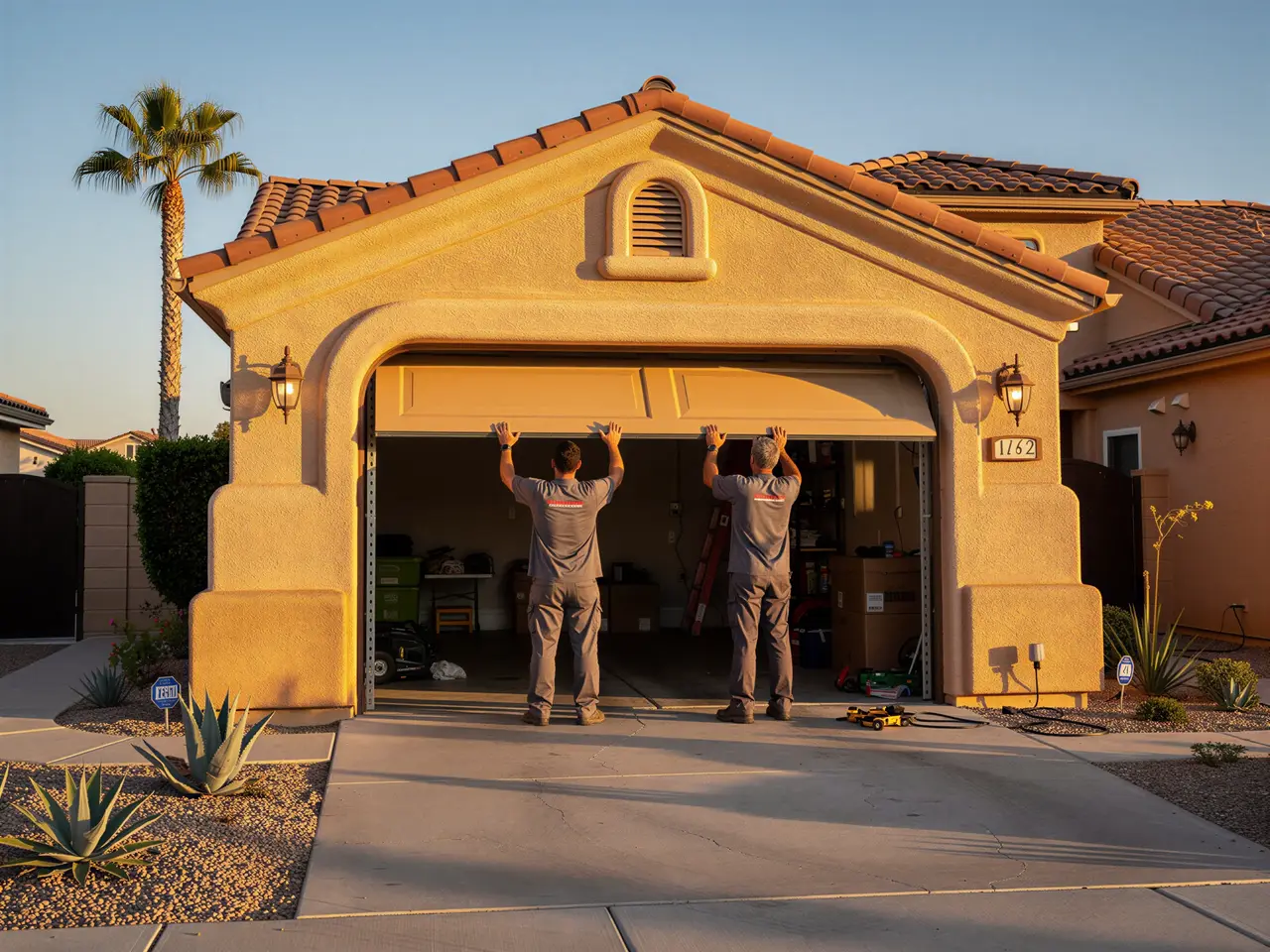
Most of the doors we pull out in Ontario have been on the job since the house was built. Across this service area, homes went up between 1957 and 2007, with the median landing around 1976 - so a door that's original to the house is pushing fifty years of lift cycles on springs and rollers that were never meant to last that long. That's not a knock on the door. It's just math: a torsion spring rated for a certain number of cycles will reach the end of its life whether anyone notices or not, and a lot of Ontario garages are sitting right at that point now. When a homeowner calls us about installation rather than repair, it's usually because the door itself - the panels, the track width, the section height - no longer matches anything you can special-order a part for. At that point you're not fixing a door, you're replacing a piece of 1970s hardware with something built to a current spec. We see this pattern across the older tracts here more than in newer construction, simply because there's more of that housing stock to work through.
Why It Happens Here
Ontario sits in a moderate heat band, not the kind of freeze-thaw climate that cracks concrete footings or splits wood jambs. That actually works in a door's favor for structural stuff - but it doesn't spare the hardware. Decades of daily heat cycling on an unpainted steel panel, especially on a door that faces west or sits against a garage with no interior insulation, dries out old lubricant, warps thin steel skins, and loosens the fasteners holding hinges to panels. Combine that with housing stock that's mostly 1960s-70s across the named communities in this service area, and you get a specific failure pattern: single-layer steel doors, non-insulated, on hardware sized to codes and openings that builders used fifty years ago. None of that is dramatic - no storm damage, no single event - it's just slow fatigue from heat and time. That's why installation calls cluster around certain tracts here rather than being spread evenly: the doors in those areas were all built to the same spec in the same decade, so they're all wearing out on roughly the same schedule.
What You Are Seeing
The signs that push a homeowner from repair to replacement are usually visual before they're mechanical. A single steel skin door from the 1970s has no foam core, so on a hot Ontario afternoon the garage runs noticeably warmer than the rest of the house, and you can often feel heat radiating off the inside of the door itself. Look for hairline rust at the bottom panel seam, hinges that have stretched their screw holes into ovals, or a bottom seal that's cracked and lets light through at the corners. If the door still has the original lift handle and a single torsion spring rated for a lighter section weight than what's actually hanging on it, that's another sign the whole assembly predates current practice. None of these things mean the door is dangerous today, but they mean the next spring failure or roller seizure is a matter of when, not if, and at that point patching one part just buys you a few more months on an otherwise worn-out system.
Doing It Yourself
There's real work here a homeowner can do without a truck showing up: cleaning and lubricating rollers and hinges, replacing a torn bottom seal, tightening loose hinge screws, or swapping foam weatherstripping around the jamb. All of that extends the life of an old door and costs almost nothing. What we don't recommend doing yourself is the installation itself - setting a new door, winding a torsion spring to the correct tension, and squaring track to a fifty-year-old opening that's rarely as plumb as it looks. A torsion spring under load can put someone in the hospital, and an opening that's out of square by even half an inch will bind a new door no matter how good the door itself is. If you're set on a DIY approach, the honest limit is this: handle the maintenance, leave the spring and the install to someone who does it as a trade, not a weekend project.
Frequently asked questions
How old does a garage door have to be before replacement makes more sense than repair?
There's no fixed age, but once a door is original to a house built in the 1960s or 70s, parts availability becomes the real issue - tracks, hinges, and spring sizes from that era often don't match what's stocked today. At that point, sourcing obsolete parts can cost more than installing a new door sized to current hardware.
Do I need an insulated door for an Ontario garage?
It depends on how you use the space. Ontario's climate runs in a moderate heat band rather than extreme cold, so insulation matters more for keeping a garage workspace or attached room comfortable than for freeze protection. A single-layer steel door is common in the older housing stock here, but it does run noticeably hotter inside.
Can I reuse my old opener with a new door?
Sometimes, if the opener is in good shape and the new door's weight and travel distance are close to the old one. We check the opener's lift capacity against the new door's actual weight before reusing it - mismatched weight is what causes new installs to strain an old motor.
What's involved in measuring for a new door on an older house?
Older Ontario openings aren't always square or the exact size modern doors are built for, since a lot of this housing stock dates to the 1960s and 70s. We measure the rough opening, headroom, and side room before ordering, because a door built to spec won't fit an opening that's shifted even slightly over fifty years.
Book garage door service in Ontario
Call now or request a quote - tell us what the door is doing and where you are.