
Ontario, CA · Garage Door Service
Garage Door Service for Chino Hills Homes
Chino Hills homes mostly date to around 1990, later than much of the wider service area. We explain what that means for your door, spring, and opener from our Ontario shop.
- Repairs & new doors
- Springs & openers
- Serving 6 nearby communities
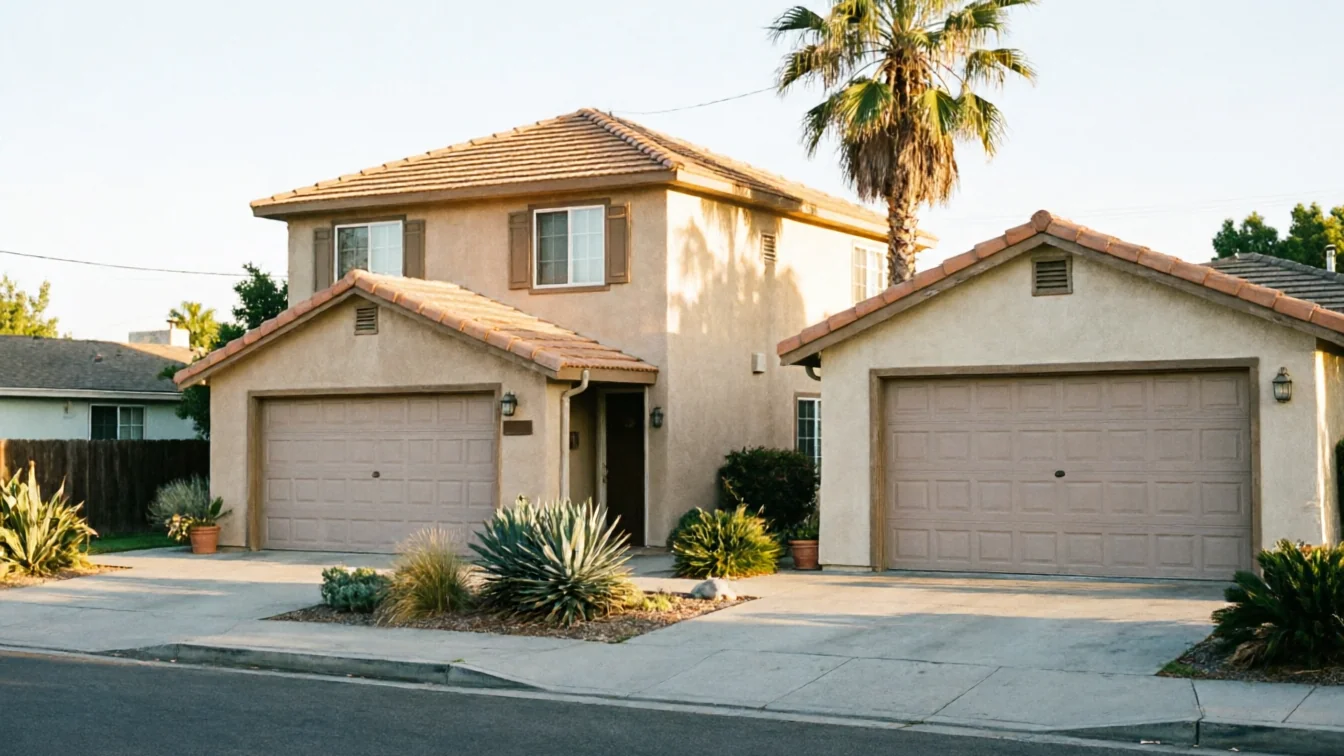
Older vs Newer Streets
Chino Hills sits apart from a lot of the territory we cover. Across the wider service area the typical house went up somewhere around 1976, with stock stretching from 1957 to 2007. Chino Hills skews newer than that average - the median build year here lands closer to 1990. That's a meaningful gap. A house built in 1990 came with a different opener, different spring setup, and different track hardware than one built in the 1960s or 70s that's common in older pockets of the service area.
What that means on the ground: fewer of the original heavy one-piece wood doors and side-mounted torsion units that show up in older neighborhoods, and more sectional steel doors on standard torsion springs with chain or belt-drive openers from the 90s and early 2000s. Those openers are now old enough to be at or past the end of their working life, even if the door itself still looks fine. We still run into some early-90s units with worn drive gears or dead logic boards - common once a garage door opener crosses the 25-30 year mark, which a lot of Chino Hills openers now have.
What the Housing Means for Your Door
Because most Chino Hills homes are 1990-era construction, the garage door problems we see here tend to cluster around wear rather than outdated design. Torsion springs on a door installed when the house was built are well past their rated cycle count by now - that's a straightforward swap, not a redesign. Openers from that same era are the bigger issue: logic boards fail, drive gears strip, and remote frequencies on some of those older units don't match anything sold today.
Compare that to a neighborhood built in the 1960s, where the door itself might be the original heavy wood panel on undersized hardware never meant to carry it this long - a different kind of job entirely, often a full replacement rather than a repair. Chino Hills mostly skips that problem. One honest limitation: if your home happens to be one of the older outliers rather than the 1990-era norm, parts for an original door from that period may need to be special ordered, and we'll tell you that up front rather than guess at a timeline.
What We Do Most in This Area
The calls we get from Chino Hills follow the pattern you'd expect from housing stock this age: broken torsion springs that have simply worn out, opener replacements where the old chain-drive unit has died or is too noisy to live with, and track or roller work on doors that have been cycling for three decades without much maintenance. We also handle cable and drum replacement, panel damage from backing into the door, and safety sensor repairs on openers old enough to predate modern auto-reverse standards.
We travel to Chino Hills from our shop in Ontario, about 10 miles out. We don't keep a crew stationed in the area, so we're straightforward about scheduling rather than promising something we can't back up. What we can say is that the jobs here tend to be predictable once we know the house is from the 1990-era build wave - we're not guessing at unknown hardware the way we sometimes are in older, pre-1960s sections of the wider service area.
This Area's Housing
Chino Hills has roughly 25,485 households, and median household income here runs about $122,600 - noticeably higher than the $103,632 median across the full service area we cover from Ontario, which includes about 346,173 households and 175,466 owner-occupied houses. That income gap shows up in the work: more owners here choose to replace an aging opener outright rather than patch it, and more ask about insulated steel doors over bare single-layer panels.
Climate-wise, this part of Southern California sits in a moderate-heat band, which is easier on garage door hardware than harsher climates - springs and openers here aren't fighting the same temperature swings you'd see elsewhere, so wear is driven more by age and cycle count than by weather stress. Combined with a housing stock centered on 1990 rather than the 1976 median typical of the broader area, Chino Hills is one of the more consistent neighborhoods we work in: most doors and openers are from the same rough era, which makes diagnosing the problem faster once we're on site.
Frequently asked questions
Is my garage door opener too old to repair?
If it's original to a Chino Hills home built around 1990, it's likely 30+ years old. At that age, logic boards and drive gears are often past reliable repair, and replacement usually makes more sense than chasing parts for a discontinued model. We'll look at the specific unit before recommending either.
Do you have a shop in Chino Hills?
No. We're based in Ontario, about 10 miles away, and travel out to Chino Hills for service calls. We don't keep a local depot or crew stationed here, so we're upfront about that rather than implying a local presence we don't have.
Are Chino Hills garage doors different from older parts of the service area?
Generally yes. Most Chino Hills homes date to around 1990, later than the 1976 median typical across the wider area we serve. That means more sectional steel doors on standard torsion springs and fewer original heavy one-piece wood doors you'd find in older 1960s-70s neighborhoods elsewhere.
Why does my spring need replacing if the door still looks fine?
Torsion springs are rated for a cycle count, not a calendar date. A spring installed when a 1990-era Chino Hills house was built has likely cycled tens of thousands of times by now, regardless of how the door looks or sounds. Age and use wear the spring down even without visible damage.
Garage door services in Chino Hills
Every service our crew runs in Chino Hills, CA.
Book garage door service in Ontario
Call now or request a quote - tell us what the door is doing and where you are.