
Ontario, CA · Garage Door Service
Why Your Garage Door Jumped the Track
Ontario homes built mostly in the 1960s-70s wave have track hardware pushing fifty years old. Here's what actually knocks a door off track here, and what to leave alone.
- Repairs & new doors
- Springs & openers
- Serving 6 nearby communities
When Waiting Is Fine
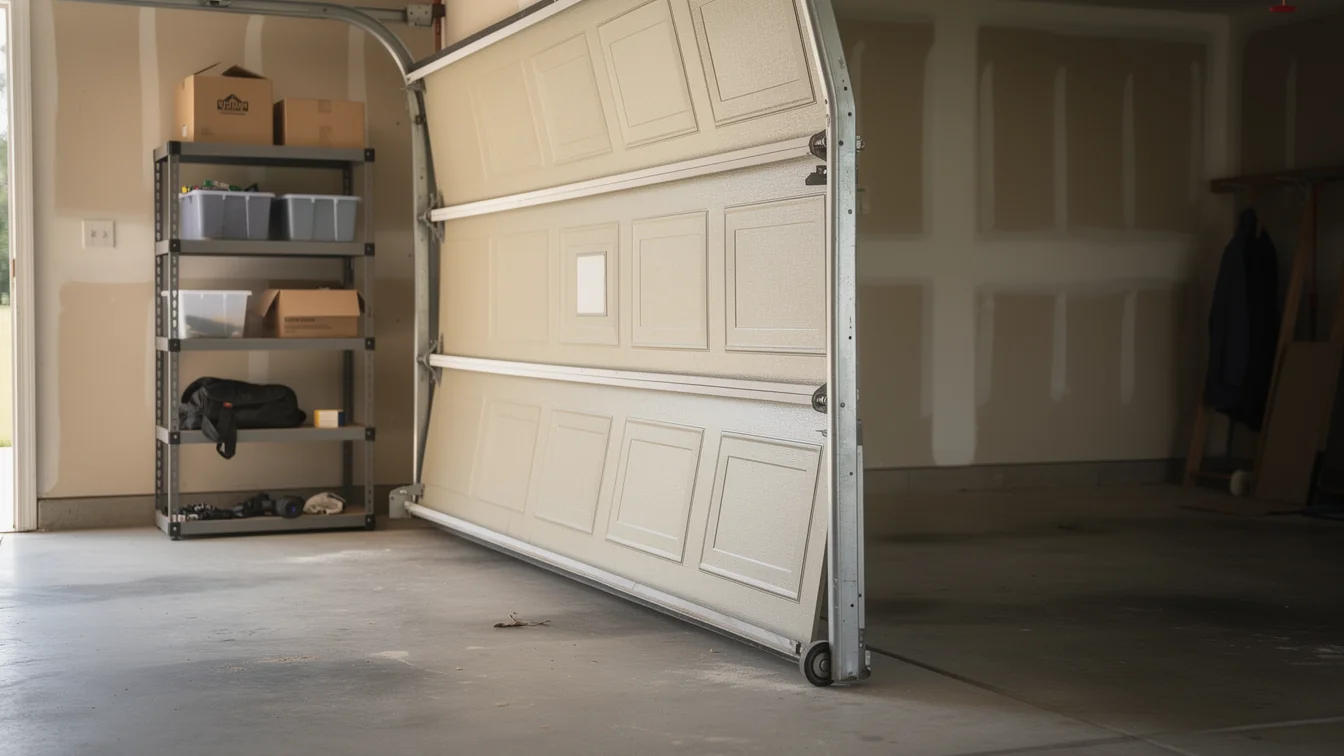
Not every off-track door is an emergency. If the door is down, the opener is unplugged, and nothing is grinding or screeching when you nudge it by hand, you can usually wait a day or two to get it looked at. What you shouldn't do is keep hitting the opener button hoping it reseats itself - that's how a roller that popped out of a worn track turns into a bent track that needs replacing instead of adjusting.
Across the service area, a lot of the housing stock went up between 1957 and 2007, with the typical build year sitting around 1976. On a house from that wave, the track brackets are original hardware more often than not, and a loose bracket moves slowly over years before it finally lets a roller walk out of the rail. That slow failure means you usually have some warning - a door that's been rattling a bit more than usual, or dropping slightly crooked - before it actually leaves the track. If yours is still moving, even roughly, there's no reason to treat it as a same-day call.
The Cost of This Job
What this costs depends almost entirely on whether the track is bent or just knocked loose. A track that popped a roller but is still straight is a bracket-and-roller fix. A track that got bent - usually from someone forcing the door down after it jumped, or a car bumper catching the bottom section - means replacing that section of rail, and sometimes both sides if the door racked sideways when it came down crooked.
Median household income across this service area runs $103,632, and with 175,466 owner-occupied houses in the mix, this is a repair we see regularly on homes from that 1960s-70s construction window rather than something rare. We don't carry every gauge of track on the truck, so if your rail is an odd width from an older original door, parts can mean a short wait rather than a same-visit fix. That's worth knowing going in, not after we've already opened the door up.
How Local Conditions Play In
Ontario sits in a moderate heat band, not the kind of climate that puts extreme daily swings on steel track the way some desert areas do. So when a track goes crooked here, it's less often a heat-warp problem and more often just age - decades of lag screws working loose in jamb studs, brackets that were never re-torqued after the house settled, or a spring system that's lost tension and let the door drop unevenly onto the rollers.
The age of the hardware matters more than the weather does in this part of the service area. A door on a house built in the 1976 range has had fifty summers of expansion and contraction on those brackets even without extreme heat, and that's enough on its own to loosen things gradually. Newer construction nearby, like homes in the Ontario Ranch area just a couple miles southeast, tends to have tighter original hardware simply because it hasn't had the decades to work loose yet.
What Is Going On
Most off-track calls come down to one of three things: a broken or weakened spring that let the door fall unevenly and twist a roller out of the rail, a bent track section from an impact, or bracket screws that have backed out of the framing over years of vibration. On the older end of the local housing stock - the 1960s and 70s builds that make up a lot of this area - it's usually the bracket screws. Wood jambs shrink slightly over decades, and the screws that held tight in 1976 don't always hold the same grip now.
We check all three before touching anything, because tightening a bracket on a door that's actually off because of a broken spring just wastes your time and doesn't fix the real problem. If the track itself is bent, straightening it rarely holds - once steel rail kinks, it kinks again in the same spot. In that case we'll tell you straight that replacing the section is the better money than trying to save it.
Frequently asked questions
Can I push the door back onto the track myself?
You can try to nudge a roller back in if the door is down and the opener is unplugged, but if a spring is involved the door can drop without warning while you're working on it. If the track looks bent rather than just knocked loose, don't force it - forcing a bent rail usually makes the kink worse and turns a repair into a full section replacement.
Is this related to the age of my house?
Often, yes. A lot of houses in this service area date to the 1960s and 70s, with the overall stock running 1957 to 2007. On the older end, original track brackets have had decades to work loose in the framing, which is a common reason a door walks off its rail even without any obvious impact.
Will you have the part on the truck?
For standard roller and bracket hardware, usually. Older or odd-width track sections aren't something we carry in every size, so if your rail is original to a 1960s or 70s build, there's a chance we need to order the exact gauge rather than fix it on the first visit.
Related garage door services in Ontario
More garage door guides
Book garage door service in Ontario
Call now or request a quote - tell us what the door is doing and where you are.