Ontario, CA · Garage Door Service
Garage Door Maintenance for Diamond Bar's 1979-Era Doors
Most Diamond Bar homes went up around 1979, old enough that springs and rollers are due. We drive out from Ontario to service the hardware common to that era.
- Repairs & new doors
- Springs & openers
- Serving 6 nearby communities
What Is on the Truck
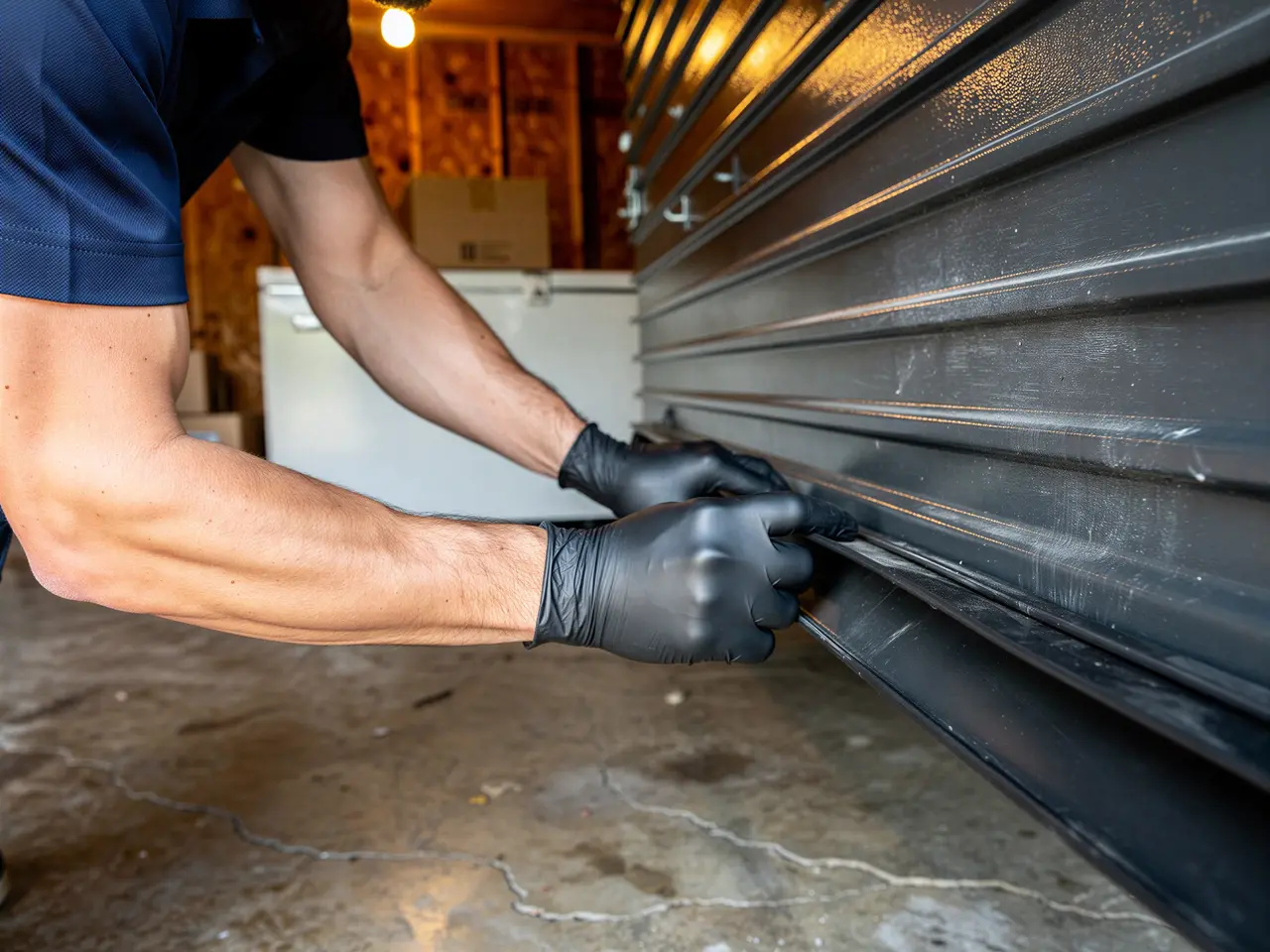
Diamond Bar's housing stock centers on 1979, which puts a lot of doors here a generation past their original torsion springs and rollers. That's different from the mix of 1960s-70s builds we see closer to Ontario, and it changes what we load before we head out. For a late-70s door we bring standard-wind torsion springs sized for the heavier wood and early steel sections common to that build period, plus nylon rollers to replace the steel ones that came stock and have been grinding in the track for decades. We also carry lithium-based grease instead of the old graphite-and-oil combos, since graphite dries out faster in sustained summer heat and leaves tracks gritty rather than smooth. Hinges and end bearing plates round out the kit - on a door this age, at least one hinge is usually stretched enough to let the panel rack slightly, even if the owner hasn't noticed it yet. We don't carry parts for openers manufactured before the mid-80s logic board era; if your opener dates back that far, we'll tell you straight that replacement makes more sense than sourcing a part nobody stocks anymore.
What the Repair Takes
On a typical maintenance call in Diamond Bar, the first ten minutes go to checking spring tension and cable wear, because a 1979-built door has had roughly four and a half decades of cycles on the original hardware unless something's already been swapped. We balance the door, lubricate every moving metal-on-metal point, and tighten the fasteners on the track brackets - those loosen gradually on homes of this vintage as the framing settles. If rollers are original steel, we'll flag it; they're usually the loudest and the first to seize. We don't repaint or refinish door panels as part of a maintenance visit, and we won't pretend a cosmetic fix extends the life of hardware that's failing underneath it. The honest limitation here: if the spring is original to 1979, we're not going to recommend patching it further. Springs are rated for a cycle count, and a spring that old is closer to failure than its listed lifespan tells you, which is a safety call, not an upsell.
Time on the Job
We travel the twelve miles out from Ontario to reach Diamond Bar, so we schedule maintenance visits in blocks rather than same-day drop-ins. Once on site, a standard tune-up on a single door runs through balance check, lubrication, hardware inspection, and a full-cycle test, and a two-car door with original hardware from the late 70s typically takes a bit longer than a newer install simply because there's more to inspect and more corrosion to work through on fasteners that haven't been touched since the house was built. We don't rush the hardware inspection - that's the part of the visit that actually prevents the 2 a.m. spring failure, not the lubrication, which is maintenance but not protection.
What You Are Seeing
If your door is original to a Diamond Bar house built around 1979, the signs of wear tend to show up the same way: a grinding or squealing roller noise that gets worse in warm weather, a door that seems to hesitate or jerk partway through its cycle, or a faint sag at one corner of the panel when it's down. None of these point to a dramatic failure, but they're consistent with hardware that's been in service for over forty years without a tune-up. Homes in this area generally sit on the higher end of income for the region we cover, which often means the garage door itself got replaced at some point even if the opener and track didn't - so it's worth checking the age of each part separately rather than assuming they match. If you're hearing a loud bang followed by the door refusing to open at all, that's very likely a snapped spring, not a maintenance issue, and it needs a repair call rather than a tune-up.
Frequently asked questions
How often should a Diamond Bar homeowner get garage door maintenance done?
If your door is original to a house built in the late 1970s, once a year is reasonable for lubrication and a hardware check. Newer doors with updated openers can often go longer between visits, but we'll tell you honestly what we find rather than push a schedule that doesn't match your hardware's actual condition.
Do you have a local office in Diamond Bar?
No. We're based in Ontario and drive out to Diamond Bar, about twelve miles away, for scheduled maintenance and repair calls. There's no branch location here, so visits are scheduled in advance rather than same-day drop-ins.
Will maintenance fix a door that's already making a grinding noise?
Sometimes. If it's a dry roller or hinge, lubrication and a hardware tightening often clear it up. If the grinding is coming from a bent track or a spring near the end of its cycle life, maintenance will surface the problem but won't fix it - that becomes a separate repair.
Is it worth maintaining an opener that's decades old?
Depends on the age. We don't carry parts for openers from before the mid-80s logic board era, so on a door that old we'll usually recommend replacing the opener outright rather than trying to keep servicing a part nobody stocks anymore.
More garage door services in Diamond Bar
Book garage door service in Ontario
Call now or request a quote - tell us what the door is doing and where you are.