
Ontario, CA · Garage Door Service
What an Older Door in Ontario Is Actually Worth Fixing
Ontario homes mostly date 1957-2007. Here's how to tell if your original door and hardware are worth repairing or if it's time to replace.
- Repairs & new doors
- Springs & openers
- Serving 6 nearby communities
When Waiting Is Fine
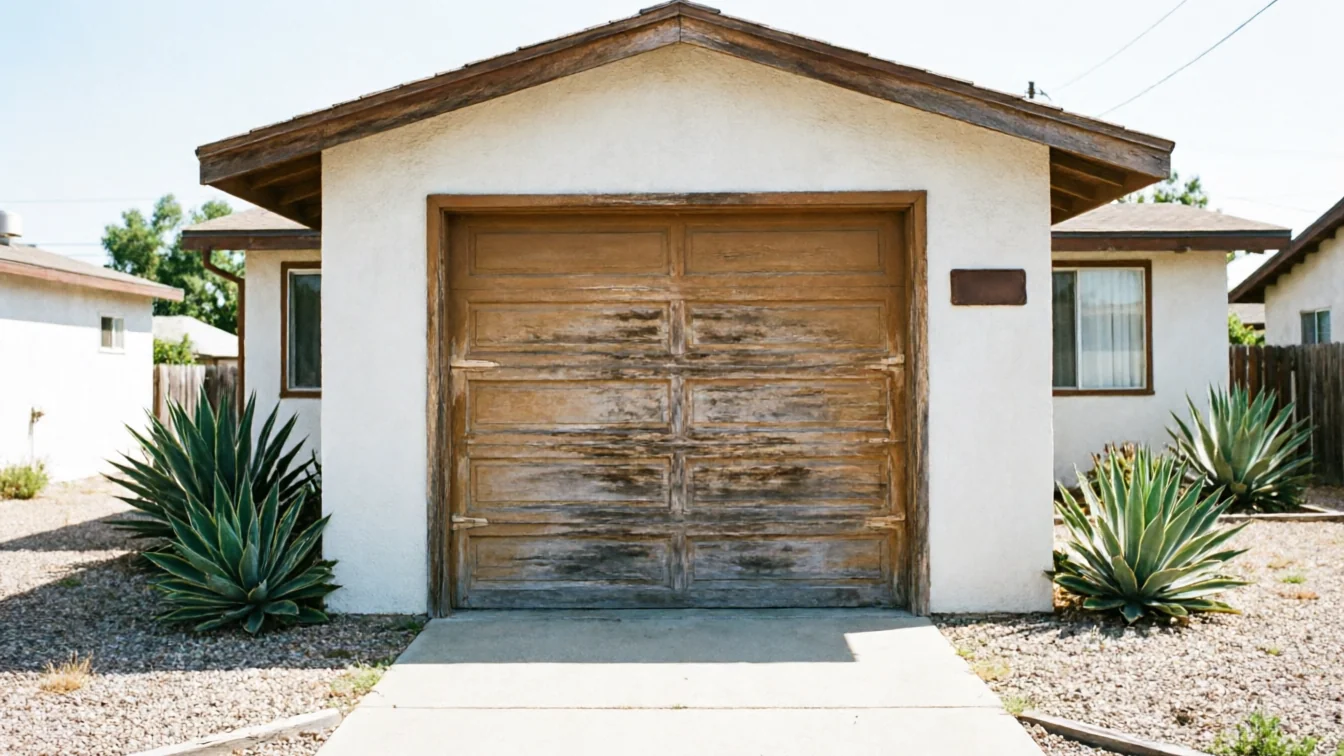
Not every noise or sag means you need a new door today. If your house went up anywhere in the 1960s-70s wave that covers most of Ontario's roughly 30 named neighborhoods, the door itself may be original, but a lot of the hardware has already been swapped out once by a prior owner or a repair call years back. If the panels are straight, the track lines up, and the spring is just noisy rather than visibly stretched or gapped, you can usually wait. A door that opens and closes level, seals at the bottom, and doesn't bind partway up is doing its job even if it's forty years old. Where we tell people to wait: cosmetic dents on a steel door that still balances fine, a slightly stiff opener chain that just needs lube and adjustment, or hinges that squeak but hold their shape. None of that is urgent, and spending money on it now doesn't save you money later. The one thing we won't talk you out of checking is balance - a door that's out of balance is working the opener harder every single cycle, and that's the kind of wear that turns into a real bill.
The Cost of This Job
We can't quote a price without seeing the door, so we won't put a number here that doesn't hold up. What we can tell you is how the decision usually breaks down. A home built in the 1957-2007 window Ontario falls into (median build year 1976, per Census data) typically has one of two things going on: original hardware that's simply reached the end of its service life, or a replacement door from an earlier remodel that's now itself twenty-plus years old. Fixing a spring, a cable, or a bent track section is a contained job. Replacing the whole door, especially if the opening doesn't match current standard sizes or the track has to be rebuilt for a new door, is a bigger job. With median household income in the service area at $103,632, most owners here are weighing a repair against a full replacement rather than deciding whether to do anything at all - that's a real financial call, not a cosmetic one. The honest answer, every time, is that we look at the door in person before we talk numbers.
How Local Conditions Play In
Ontario sits in a moderate heat climate band, which matters more for garage doors than people expect. You don't get the freeze-thaw cycling that cracks panels and seizes hardware in colder states, but sustained heat does its own damage over decades: it dries out and cracks weatherstripping, and it breaks down the lubricant in torsion springs faster than a mild climate would. On a door built or installed anywhere near the 1976 median age for this area, that's forty-plus years of heat cycling on steel and springs that weren't built to last that long in the first place. This is why a door that looks fine from the driveway can have a spring that's lost most of its tension - heat fatigue doesn't always show up as rust or visible wear. It's also why we don't push insulated doors as a universal upgrade here the way a company in a cold-climate market might. In Ontario's heat band, the bigger win is usually fresh weatherstripping and a spring rated for the cycle count your door actually sees, not a full insulated replacement.
What Is Going On
Across the roughly 346,173 households and 175,466 owner-occupied houses in this service area, the pattern we see is pretty consistent: doors installed during the main building wave are now old enough that the springs, cables, and rollers are original or close to it, even if the door panel itself has been replaced once. That mismatch - new-ish door, old-ish hardware - is the most common reason a
Frequently asked questions
How do I know if my garage door spring is original to the house?
If your house was built in the main 1960s-70s wave common across Ontario and nobody's mentioned a spring replacement, assume it's original or close to it. Springs are rated for a cycle count, not a calendar date, so a 40-year-old spring that's seen daily use is well past its design life even if it hasn't broken yet. We check tension and wear on-site.
Is it worth replacing just the opener on an older door?
Often yes. If the door panel, track, and springs are sound, a new opener can extend the life of an otherwise good older door for years. Where it stops making sense is when the track or hardware is also worn - putting a new opener on a door that's binding or out of balance just wears the new opener out faster.
Does Ontario's climate affect how long a garage door lasts?
Yes, though not the way cold-climate damage works. Ontario's moderate heat band dries out weatherstripping and breaks down spring lubricant faster than a mild year-round climate would. You won't see freeze cracking, but heat fatigue on springs and seals adds up over the decades-old door typical of this area's housing stock.
Should I replace a door just because it's old?
Age alone isn't the deciding factor. A straight, balanced door with sound track and hardware can keep working well past 40 years. What matters is whether the spring tension, cable condition, and panel alignment are still sound - we assess that in person rather than going by the build year alone.
Related garage door services in Ontario
More garage door guides
Book garage door service in Ontario
Call now or request a quote - tell us what the door is doing and where you are.