
Ontario, CA · Garage Door Service
When a Spring Goes Stiff or Snaps on an Ontario Garage Door
Why a stiff garage door spring in Ontario, CA usually isn't about cold at all, and what the area's housing stock and mild climate band actually mean for your door.
- Repairs & new doors
- Springs & openers
- Serving 6 nearby communities
When Waiting Is Fine
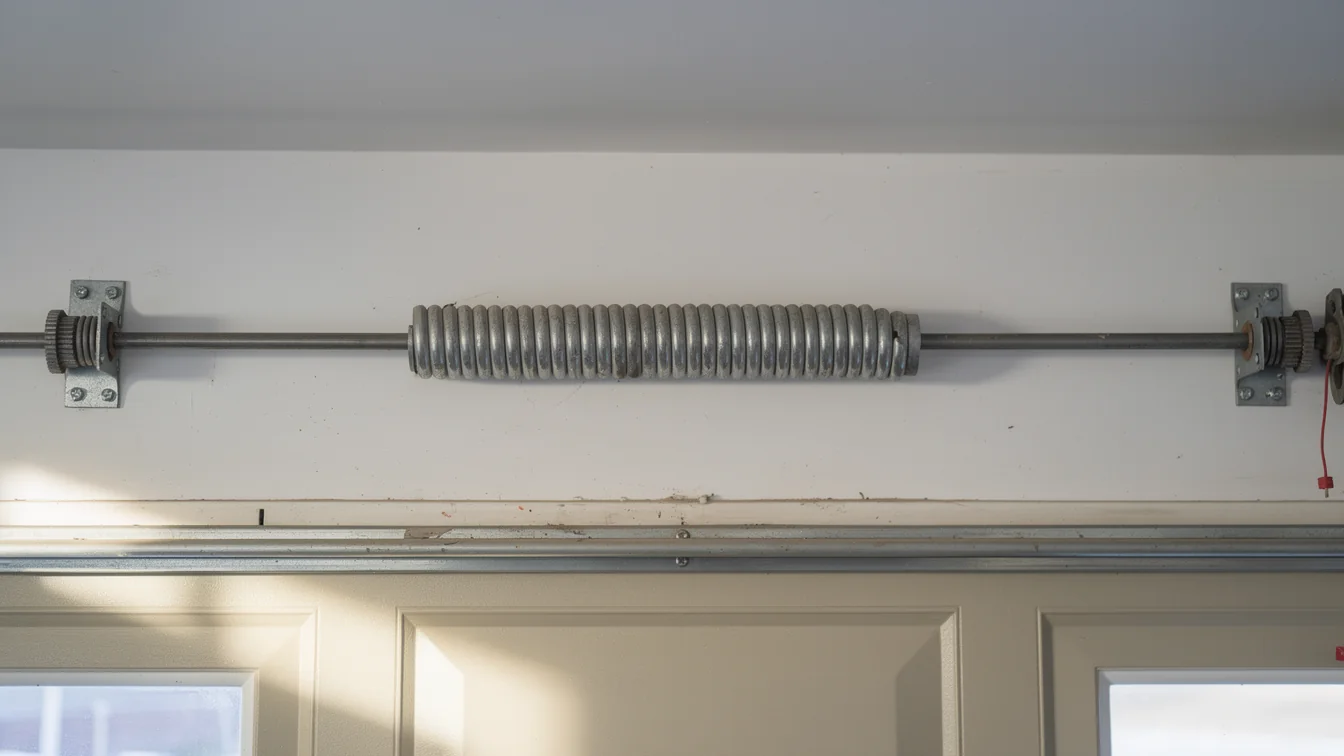
If your door feels a little heavier or the opener strains on a cool morning, that's not an emergency here the way it might be somewhere with real winter. Ontario sits in a moderate heat climate band, not a hard-freeze one, so you're not dealing with the kind of overnight metal contraction that snaps a spring outright in a lot of colder regions. A torsion spring that's stiff at 6 a.m. and fine by 10 a.m. is just doing what metal does when the temperature swings a little - it's not a sign the spring is about to fail. You can usually wait for a scheduled visit instead of calling it urgent. The one thing worth watching: if the door is hard to lift by hand even once it's warmed up, that's a different problem and it's not one you should keep opening the door on, because a spring under full tension that lets go while someone's underneath the door is the actual danger, not the stiffness itself.
The Cost of This Job
What a spring job runs depends more on your door than on the weather. A single torsion spring on a double door, or extension springs on an older two-door setup, prices out differently - and with a service area where the typical house was built around 1976 (with stock spanning 1957 to 2007), we see a wide mix of original hardware still in place. A 1970s door often has side-mounted extension springs that need safety cables added if they were never there; a newer door built after 2000 is more likely already on torsion hardware. The honest limitation here: we can't quote a number without seeing the door, because torsion vs. extension, single vs. double spring, and door weight all move the price. What we can tell you is that median household income across this service area runs $103,632, which puts a full spring-and-cable job well within the range most homeowners here budget for routine home repair, not a hardship call.
How Local Conditions Play In
Cold snaps aren't the stressor on springs in Ontario - heat cycling is. This area's climate band is rated moderate heat, and a spring that sits in a garage that swings warm all afternoon and cools at night is going through small expansion-and-contraction cycles day after day, year after year. That's fatigue, not shock failure. Combine that with a service area where most houses were built in the 1960s and 70s across the 30 named communities in this region, and you get a lot of original or first-replacement springs that are simply at the end of their rated cycle count - somewhere around 10,000 open-and-close cycles for a standard torsion spring, regardless of weather. A door that's 45 to 65 years old on its original spring isn't failing because of a cold morning; it's failing because it's been doing this twice a day for decades. The cold-weather version of this story you hear about in other parts of the country mostly doesn't apply here.
What Is Going On
When a torsion spring breaks, you'll usually hear it - a loud bang from the garage, often mistaken for something falling or even a car backfiring. The door won't lift, or it'll lift a few inches and stop, because the spring's job is to counterbalance the weight of the panels and without it the opener is trying to lift the whole door on its own. Across a service area of 346,173 households and 175,466 owner-occupied houses, we see this most on doors that match the dominant build era here - 1960s and 70s construction, sometimes with hardware that was never upgraded past the original install. If your door was built before the mid-1990s and you don't know when the spring was last replaced, assume it's original. That's not a cold-weather problem. It's a 'this spring has done its job for fifty years' problem, and once one spring on a pair goes, the other usually isn't far behind.
Frequently asked questions
Does cold weather actually break garage door springs in Ontario?
Not the way it does in colder climates. Ontario's climate band is moderate heat, not hard freeze, so you don't get the sharp overnight metal contraction that causes sudden spring failure elsewhere. What you do get here is normal heat-cycle fatigue on springs that are often decades old, especially on houses built in the dominant 1960s-70s stock.
My door is hard to lift on a cool morning but fine later - is that the spring going bad?
Usually it's just the metal responding to temperature, not a failure in progress. It becomes a real concern if the door stays heavy to lift by hand even after it's warmed up, or if you hear new noise from the spring area. That's worth a call rather than a wait.
How do I know if my spring is original to the house?
If your house was built in the 1960s or 70s, which covers a large share of this service area, and nobody in your ownership history has replaced the spring, assume it's original or close to it. A torsion spring rated for around 10,000 cycles on a door used twice daily reaches that count in roughly 13-15 years, so an original spring on an older house is well past its rated life.
Can I replace just one spring if I have a pair?
You can, but it's not usually the better move. If one spring failed from age or cycle fatigue, the other one on the same door has seen the identical wear and is close behind it. We don't recommend replacing only one on a matched pair.
Related garage door services in Ontario
More garage door guides
Book garage door service in Ontario
Call now or request a quote - tell us what the door is doing and where you are.